Strong, well-colored, well-shaped plastic still isn’t always enough. A product might need protection from sunlight. It might need smoother processing, less static, or a particular surface feel.
Additive masterbatches add those traits. Functional additives are usually added to plastic during manufacturing. Understand the types and benefits, and you’ll get better products and more consistent processing.
What Are Additive Masterbatches?
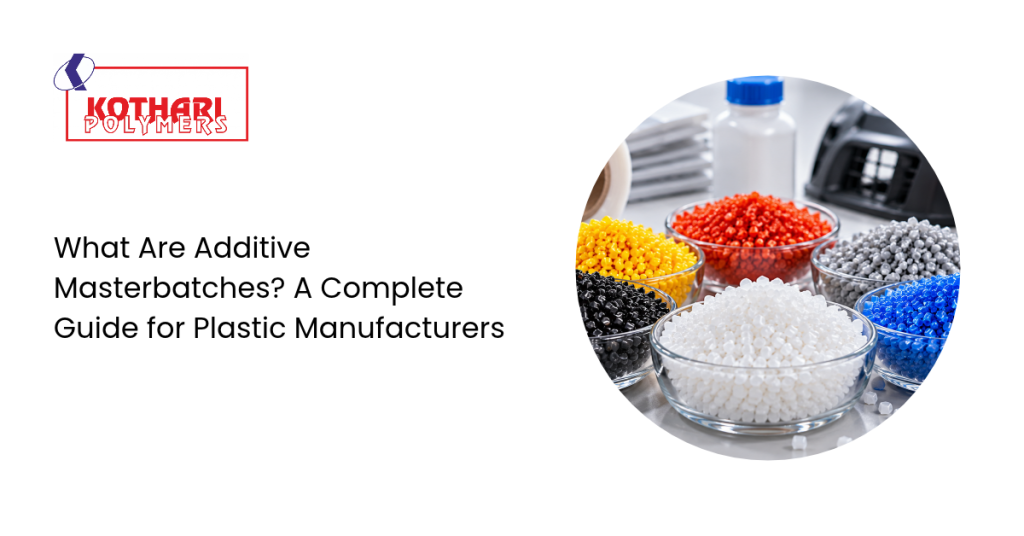
An additive masterbatch is a concentrated blend. Functional additives are spread through a compatible carrier resin. It is typically offered in pellet form. It is added to the base polymer during production and provides the desired properties.
The main function of color masterbatches is to modify a product’s appearance. Additive masterbatches focus on function. The effectiveness of their action depends on the formulation, its compatibility with the polymer, dosage, and processing.
What Are the Different Types of Additive Masterbatches?
1. UV Stabilizer Masterbatches
Ultraviolet radiation fades plastic, makes it brittle, and breaks it down. UV stabiliser masterbatches help guard against that. They suit some outdoor products, agricultural films, and plastic parts that sit in the sun.
2. Antioxidant Masterbatches
Antioxidants help limit oxidation, both during processing and over the product’s life. Depending on the formulation, they can cut heat-related breakdown and help the material keep its intended properties.
3. Anti-Static Masterbatches
These cut down static charge on plastic surfaces. They help in packaging, electronic component handling, and other jobs where static causes trouble.
4. Slip and Anti-Block Masterbatches
Slip additives lower friction between plastic surfaces. Anti-block additives stop film layers from sticking together. Both matter most in plastic film and packaging production.
Other specialized formulations exist too. Flame-retardant additives are one example. Choose them when your product’s use and the applicable safety requirements call for them.
What Are the Benefits of Using Additive Masterbatches?
Additive masterbatches let manufacturers adjust the characteristics of the plastic. They don’t have to rework the whole base polymer formulation. The main benefits are:
- Improved Functionality: Include properties that will be useful for the product.
- Convenient Handling: Typically pelletized concentrates are easier to measure and manage than loose additive powders.
- Consistent Dispersion: The formulation and mixing process helps to spread the additives more evenly.
- Processing Efficiency: The right additives may improve certain processing traits and cut production headaches.
How Should Manufacturers Choose the Right Additive Masterbatch?
Before you choose a supplier, review these technical aspects. First, ensure the carrier resin is compatible with your base polymer, such as polyethylene (PE) or polypropylene (PP). Next, consider processing temperatures, the required additive concentration, and the product applications.
Don’t forget to read the technical data sheets. Read the recommended dosage levels, batch uniformity and regulatory requirements where applicable. Test it in actual production conditions before accepting in large quantities.
An experienced additive masterbatch manufacturer in Ahmedabad can guide you in selecting the right formulation for your processing technique and end-product requirements.
Conclusion
Choosing the wrong additive can negatively affect processing consistency, product performance, and production costs. Manufacturers need a supplier who understands how polymer compatibility, functional needs, and manufacturing conditions fit together.
Kothari Polymers is an additive masterbatch manufacturer in Ahmedabad, offering additive masterbatches and a wider range of plastic masterbatch solutions. This includes black, white, color, filler, and engineering masterbatches. With over 35 years of industry experience, we work with manufacturers across a variety of plastic applications.